What Makes AI Search Different From Traditional Search?
Traditional search engines operate on a straightforward model: index the web, match keywords, rank results, present links. AI search engines flip this model entirely. Instead of pointing to sources, they understand queries, analyze multiple sources simultaneously, and synthesize direct answers.
Three Core Differences
Natural Language Understanding vs. Keyword Matching
Traditional search engines rely on keyword matching. If you search for "best marketing automation tools 2024," the engine looks for pages containing those exact words. AI search engines understand intent, context, and nuance. When you ask "I need a tool that helps me automate email campaigns for a B2B SaaS company with 500 employees, budget under $10k/month," AI systems comprehend the specific requirements, constraints, and implied intent—something keyword matching cannot achieve.
Direct Answers vs. Search Result Lists
Traditional search returns 10 blue links, requiring users to click through pages to find answers. AI search provides synthesized responses with inline citations, delivering immediate value without leaving the platform. This "zero-click" phenomenon has grown from 25% of searches pre-2023 to over 60% in 2026, fundamentally changing how users consume information.
Conversational Context vs. Stateless Queries
Each traditional search query stands alone with no memory of previous searches. AI search maintains context throughout conversations, refining answers based on follow-ups and clarifications. A user can ask "What's the best CRM for small business?" then follow up with "What about for under $50/month?" and "Which has the best mobile app?" The AI understands the thread and builds increasingly specific recommendations.
The Architecture: How AI Search Engines Work
Understanding the technical foundation helps anticipate how these platforms evolve and where opportunities emerge. While each platform has proprietary implementations, they share common architectural patterns based on Retrieval-Augmented Generation (RAG).
Core Components
Crawling & Indexing Layer
Like traditional search, AI engines continuously scan the web to build indexes. However, AI platforms prioritize different aspects:
- Real-time updates for current events (especially Perplexity)
- Specialized indexing for content types: academic, commerce, news
- Entity recognition and relationship mapping between concepts
Query Understanding Engine
Large Language Models parse natural language queries to extract meaning:
- Intent detection: informational, transactional, navigational
- Context extraction from conversation history
- Ambiguity resolution using semantic understanding
- Query decomposition for complex multi-part questions
Retrieval System
Hybrid retrieval combines traditional methods with semantic search:
- Keyword-based search using inverted indexes
- Semantic similarity matching using vector databases
- Source selection algorithms based on authority, relevance, and freshness
- Real-time web data integration for current information
Synthesis Engine
LLMs generate coherent responses from retrieved information:
- Aggregation of information from multiple sources
- Citation insertion for source attribution
- Fact-checking and hallucination mitigation
- Formatting optimization: lists, tables, code blocks, comparisons
Response Optimization Layer
User experience and quality control systems:
- User preference learning and personalization
- A/B testing on response formats
- Safety and policy filters
- Quality scoring and ranking of alternative responses
ChatGPT's integration of web search represents the marriage of the world's most popular conversational AI with traditional search capabilities.
Technical Implementation
ChatGPT's search integration follows a sophisticated pipeline:
Query Analysis Phase
- GPT-4 analyzes whether current knowledge is sufficient or web data needed
- Identifies key entities and concepts to search
- Generates multiple search query variations based on user intent
Search Query Generation
- Creates optimized queries using different search strategies
- Prioritizes authoritative sources: news sites, academic publications, official documentation
- Uses multiple query variations to maximize relevant results
Result Processing
- Crawls top results from search engines (primarily Bing)
- Extracts key information using LLMs
- Ranks sources by credibility, relevance, and freshness
- Removes duplicates and filters low-quality content
Synthesis & Response
- Generates comprehensive answers from processed sources
- Adds citations inline ([source]) and in references section
- Maintains conversational tone consistent with ChatGPT's style
- Provides follow-up questions for deeper exploration
Citation Mechanics
ChatGPT cites sources based on:
- Source credibility and domain authority
- Content relevance to specific claims
- Information freshness for time-sensitive topics
- Cross-reference frequency across multiple sources
- Content structure and clarity
Marketing Implications
Brand visibility in ChatGPT operates differently from traditional search:
- Citations drive awareness even when users don't click through
- Authority of cited sources affects perceived answer quality
- Comprehensive, well-sourced content gains citation advantages
- Real-time relevance requires current online presence
"The shift from 'searching' to 'asking' means brands need to become sources that AI can confidently cite. Your content must be so clear, authoritative, and well-structured that it's the obvious choice for AI synthesis."
— Aleyda Solis, International SEO Consultant & Founder of Orainti
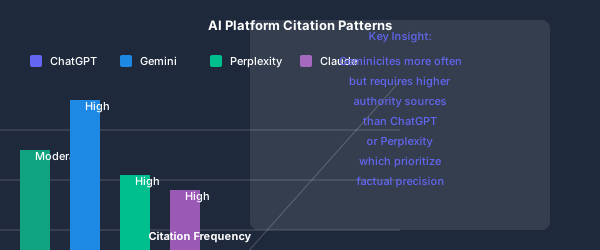
Perplexity positions itself as a "knowledge discovery engine" rather than a traditional search tool. Its real-time web crawling and citation-first approach makes it uniquely valuable for research and fact-finding.
Technical Implementation
Perplexity's architecture prioritizes transparency and accuracy:
Real-Time Web Access
- Uses proprietary crawling infrastructure independent of Bing/Google
- Updates sources continuously rather than on crawl schedules
- Excels at breaking news and rapidly changing information
Source Diversity Algorithm
- Intentionally pulls from varied perspectives and source types
- Balances mainstream media, academic papers, niche blogs, and official documentation
- Includes specialized search modes: Academic, Writing, Wolfram, and more
Transparent Citation Model
- Every claim includes numbered inline citations ([1], [2], etc.)
- References section shows full source details with preview snippets
- Click-through rates to sources are higher than competitors
- Users can filter results by source type: News, Academic, Videos, etc.
Pro Search Features
- Deeper analysis with up to 30+ sources per query
- File upload for document analysis alongside web search
- Thread sharing for collaborative research
- Focus modes for specialized use cases
Citation Mechanics
Perplexity's citation system emphasizes:
- Explicit numbered citations linked to specific claims
- Source preview functionality for quick verification
- Source credibility indicators
- Recency badges for time-sensitive information
- Cross-reference verification across multiple sources
Marketing Implications
Perplexity offers unique opportunities for brand visibility:
- High-traffic sources become default references
- Deep technical content gets preferential treatment
- Research-focused audiences gravitate to the platform
- Real-time crawling favors frequently updated content
The platform is ideal for B2B, academic, and technical markets where research depth and citation accuracy matter more than conversational engagement.
Gemini represents Google's integration of vast search infrastructure directly into a conversational AI. It benefits from Google's unparalleled web index and search understanding capabilities.
Technical Implementation
Gemini leverages Google's existing infrastructure:
Google Search Integration
- Direct access to Google's web index (largest in the world)
- Integration with Google Knowledge Graph for entity understanding
- Utilizes Google's E-E-A-T signals (Experience, Expertise, Authoritativeness, Trustworthiness)
- Seamless integration with Google Search results
Multimodal Capabilities
- Native image, video, and audio processing
- Can analyze uploaded files, images, and documents
- Integrates with Google Workspace: Docs, Sheets, Slides
- Supports cross-modal queries (search based on an image)
Personalization Layer
- Incorporates user's Google activity data (with consent)
- Customizes responses based on search history and interests
- Integration with Google's advertising ecosystem
- Context retention across Google services
Fact-Checking Infrastructure
- Leverages Google's extensive fact-checking database
- Cross-references multiple sources for verification
- Strong hallucination mitigation compared to competitors
- "Double-check" mode highlights claims with source citations
Citation Mechanics
Gemini's citation system integrates with Google's authority framework:
- Citations leverage Google's E-E-A-T scoring
- Source selection prioritizes Google's trusted publishers
- Dynamic source retrieval based on query complexity
- Integration with Google's Knowledge Graph for entity citations
- Source credibility indicators and trust signals
Marketing Implications
Gemini offers unique advantages for marketers:
- Existing Google SEO efforts translate to Gemini visibility
- E-E-A-T alignment: Google's quality signals directly impact citation potential
- Multimodal content: video and visual content have growing importance
- Google ecosystem synergy across Search, Maps, Workspace
However, personalization creates challenges: responses vary by user, making brand visibility harder to predict and measure without proper monitoring tools.
"Gemini isn't just ChatGPT with Google Search—it's deeply integrated with Google's entire understanding of the web. Your brand's Google Search Authority is now directly transferable to AI answer authority."
— Rand Fishkin, Founder of SparkToro & Moz Co-Founder
Understanding the differences between AI search engines helps optimize for each platform's unique characteristics.
Feature Comparison
| Feature | ChatGPT + Search | Perplexity | Gemini |
|---|
| Primary Data Source | Training data + Bing web search | Proprietary web crawl | Google Search Index |
| Real-Time Updates | Moderate (hours) | Excellent (minutes) | Excellent (minutes) |
| Citation Model | Inline [source] | Numbered [1], [2] | Inline links |
| Conversation Memory | Extended (long contexts) | Thread-based | Thread-based |
| Image Analysis | Yes (GPT-4 Vision) | Yes | Yes (native) |
| File Upload | Yes | Yes (Pro) | Yes |
| Specialized Modes | Data analysis, coding | Academic, Writing, Wolfram | Workspace integration |
| Mobile Experience | Excellent app | Good app | Integrated with Android |
| Free Tier | Yes (limited search) | Yes (limited queries) | Yes |
| Pro/Paid Tier | $20/month | $20/month | $19.99/month |
Marketing Channel Suitability
| Marketing Scenario | Best Platform | Why |
|---|
| Brand Awareness Campaigns | ChatGPT | Largest user base, broad reach |
| B2B Technical Content | Perplexity | Research-focused, citation-heavy |
| E-commerce Products | Gemini | Integration with Shopping, visual search |
| News & Trending Topics | Perplexity | Real-time crawling advantage |
| Long-form Content Strategy | ChatGPT | Conversational depth, context retention |
| Video Marketing | Gemini | Native multimodal capabilities |
| Academic/Professional Content | Perplexity | Academic source prioritization |
| Local Business Visibility | Gemini | Google Maps/Search integration |
Citation Patterns by Content Type
| Content Type | Most Likely to Cite | Why |
|---|
| Product Reviews | Perplexity | Diverse source requirements |
| Industry News | Perplexity | Real-time crawling |
| How-to Guides | ChatGPT | Step-by-step synthesis |
| Statistics/Data | Perplexity | Academic source preference |
| Comparisons | ChatGPT | Balanced perspective generation |
| Definitions/Concepts | Gemini | Knowledge Graph integration |
| Case Studies | Perplexity | Research methodology alignment |
| Opinion/Perspective | ChatGPT | Conversational analysis style |
The Citation Economy: How Content Gets Selected
Understanding AI search engines means understanding their citation algorithms. Unlike traditional SEO's ranking signals, AI citations operate on different principles.
Citation Selection Criteria
Source Authority
AI platforms prioritize established authorities:
- Domain authority (similar to traditional SEO signals)
- Publication reputation and longevity
- Author credentials and institutional backing
- Cross-reference frequency across authoritative sources
Content Quality Signals
High-quality content gets cited more frequently:
- Depth and comprehensiveness on topics
- Clear structure with headings, lists, and tables
- Clarity scores and readability metrics
- Publication dates and last-updated timestamps
- Absence of errors, contradictions, or misinformation
Information Density
AI platforms value dense, specific information:
- Unique insights not found elsewhere
- Data, statistics, and quantitative information
- Original research and case studies
- Specific, actionable advice over general statements
- Concrete examples and real-world applications
Accessibility & Performance
Technical factors affect citation probability:
- Fast load times and reliable hosting
- Mobile-friendly rendering and responsive design
- Clear, descriptive URL structures
- No technical barriers: paywalls, complex navigation, broken links
- Proper meta tags and schema markup
Diversity Requirements
Platforms avoid over-relying on single sources:
- Need multiple perspectives for balanced answers
- Geographic and cultural diversity for global queries
- Freshness requirements for time-sensitive topics
- Source type variety: academic, news, blogs, official docs
Key Differences From Traditional SEO
| Traditional SEO Signal | AI Citation Factor | Impact |
|---|
| Keyword density | Semantic understanding | Keyword stuffing eliminated |
| Backlink quantity | Source diversity | Quality over quantity |
| Meta tags | Content structure | Meta tags devalued |
| Page load speed | Accessibility retained | Still important |
| Freshness | Currency increased | More time-sensitive |
| Domain authority | Authority retained | Still important, but evolved |
| Click-through rate | Citation probability | Different metrics entirely |
Strategic Recommendations for Marketing Teams
Based on the mechanics of each platform, here are actionable strategies to improve your brand's AI visibility.
Audit Your Content
- Identify your most citable content pieces
- Check if information is up-to-date and accurate
- Ensure clear structure with headings, lists, and tables
- Add author credentials, publication dates, and last-updated timestamps
Monitor AI Search Presence
- Track your brand mentions across ChatGPT, Perplexity, Gemini
- Document which content gets cited and why
- Analyze competitor citations in your industry
- Identify content gaps in AI-generated answers
Optimize for Citation
- Add clear statistics and data points with sources
- Include unique insights and case studies
- Structure content with comparison tables and charts
- Ensure mobile-friendliness and fast load times
- Add author bylines and institutional affiliations
Medium-Term Strategy (Next 90 Days)
Content Production Adjustments
- Prioritize comprehensive guides over short blog posts
- Invest in original research and data studies
- Create comparison content (tool A vs. tool B, X vs Y)
- Develop evergreen resources updated quarterly
- Publish on authoritative external platforms for backlinks
Authority Building
- Contribute guest posts to authoritative publications
- Secure expert quotes in industry articles
- Develop thought leadership through consistent content
- Build relationships with journalists and researchers
- Participate in relevant communities and discussions
Technical Foundation
- Implement schema markup for rich snippets
- Optimize site speed and Core Web Vitals
- Ensure clear, descriptive URL structures
- Maintain updated XML sitemaps
- Fix broken links and technical issues
Long-Term Positioning (Next 12 Months)
Become a Source of Truth
- Develop category-defining resources and guides
- Create original data and research studies
- Build comprehensive knowledge bases on your domain
- Establish author expertise through consistent, authoritative output
Multi-Platform Strategy
- Optimize content for each platform's preferences
- Tailor formats: blog posts, academic papers, case studies
- Diversify content types to increase citation probability
- Monitor platform evolution and adapt strategy
- Track performance metrics across all platforms
Measurement & Attribution
- Develop AI search tracking metrics and dashboards
- Connect citations to brand awareness KPIs
- Measure impact on organic traffic (traditional SEO)
- Establish ROI for AI search optimization investments
- Use monitoring tools like Texta for comprehensive tracking
Recommended External Resources
- OpenAI Documentation — Technical details on ChatGPT and web search integration
- Perplexity Documentation — Search and retrieval parameters
- Gemini API Documentation — Multimodal and search capabilities
- Google AI Blog — Platform updates and research
Industry Analysis & Research
- Search Engine Journal AI Search Coverage — Ongoing analysis of platform updates
- SparkToro Research — User behavior and adoption studies
- Semrush AI Search Research — Case studies and examples
Technical Deep-Dives
- Retrieval-Augmented Generation (RAG) Explained — Technical foundation for AI search
- Understanding Large Language Models — LLM architecture and capabilities
- Google AI Principles — AI ethics and transparency
Ready to track your brand's visibility across AI search engines? Start monitoring your AI presence today.